Consulting should be easier.
Not shallow. Not casual. Not unserious. Easier.
Easier to understand. Easier to work with. Easier to trust. Easier to turn into decisions, systems, and progress.
AHS exists to help clients achieve their goals. Our job is to help you win, not to sell you things you do not need, force licenses into your environment, or turn every problem into whatever we happen to offer.
We believe real expertise means thinking and building.
Good consulting is not just advice. It is not just execution. It is the ability to understand the real problem, design a practical answer, and help make that answer real. Sometimes that means strategy. Sometimes it means technology. Sometimes it means process, automation, data, operating model design, delivery support, or a hard conversation about what is actually getting in the way.
We work best where business operations, systems, automation, and technology meet. When the work calls for more than we carry ourselves, we bring in a hand-picked network of senior peers, and we stay accountable for the outcome either way.
But we are not trying to be everything to everyone.
We are flexible, but we are not shapeless. We believe good work depends on mutual respect, trust, clarity, and shared investment. Every project is an investment of time, attention, money, and reputation, both yours and ours. That means we care about whether the work should happen, whether the conditions are right, and whether we can honestly help.
We do not want bad investments. Neither should you.
We also believe work should feel more human.
People spend too much of their lives at work for work to feel needlessly confusing, brittle, political, joyless, or absurd. Better systems should not just produce cleaner dashboards and tidier processes. They should help people feel clearer, calmer, more capable, and less alone in the mess.
That includes humor. It includes warmth. It includes usability. It includes making things easier to talk about, easier to understand, and easier to improve.
We do not see that as decoration. We see it as part of the system.
Organizations are human systems. Trust, energy, attention, pride, frustration, play, confusion, and fear all shape how work actually happens. Ignore those things and your beautiful operating model will quietly die in a shared drive somewhere.
So we try to make the work lighter without making it less serious.
We tell the truth plainly. We name constraints early. We do not hide behind jargon. We do not create theater. We do not turn consulting into another thing you have to manage.
The best work happens when both sides are serious about the outcome, honest about constraints, and willing to do what the work requires.
That is the kind of partnership AHS is built for.
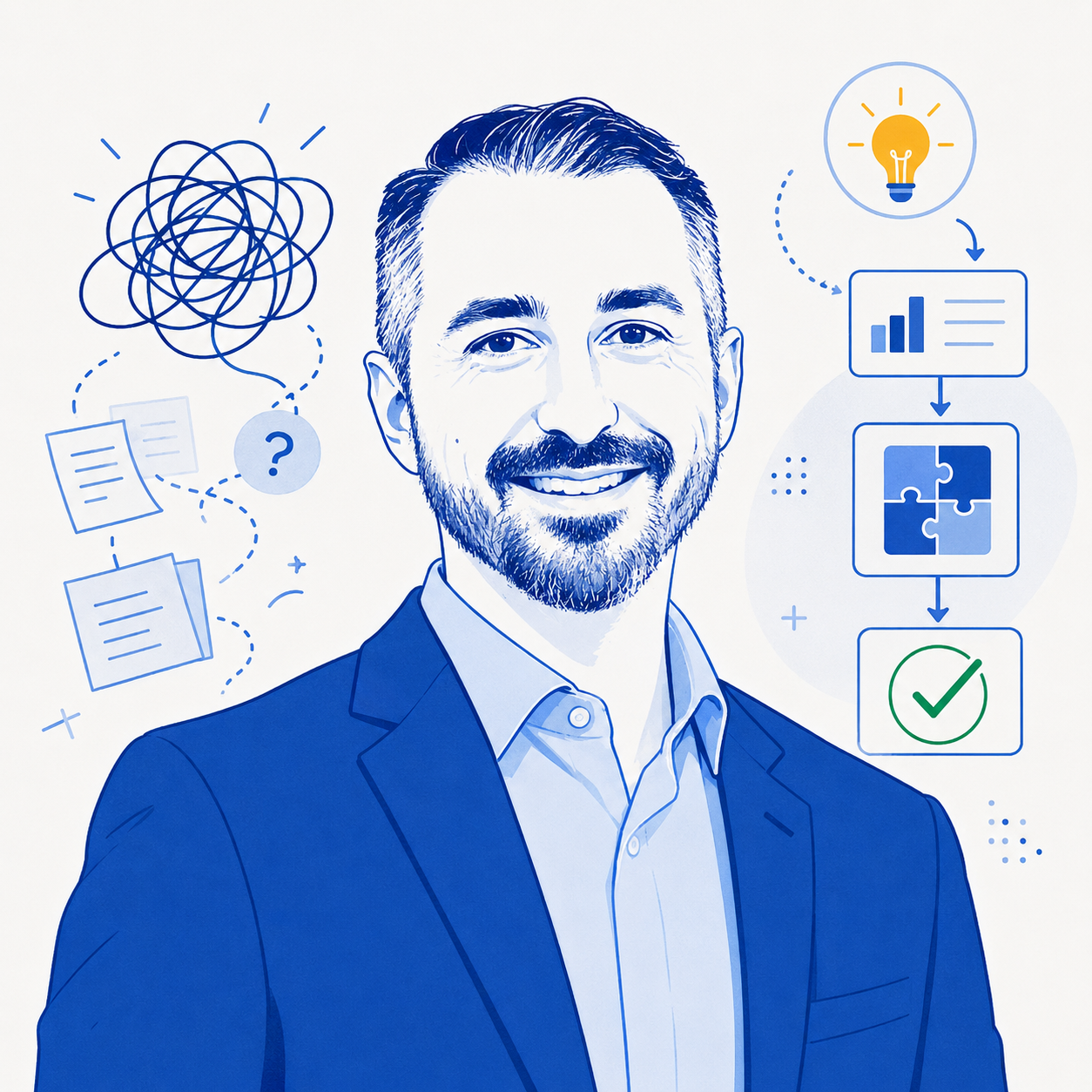
I fell in love with systems before I knew what systems were. In second grade I got my first computer for Christmas, and I still remember turning it on: the beeps, the whirring, the little mechanical sounds of a machine coming to life. It felt less like a device and more like a portal to a world of unlimited potential. That fascination never really left me.
Over time it carried me through technology support, learning systems, project management, consulting, enterprise transformation, and a master's in computer information systems. I learned how organizations make decisions, how projects succeed or fail, and how quickly good intentions become confusion when people, processes, and tools stop fitting together.
But there was always another thread running alongside the technical one. Before I studied information systems, I studied writing, film, and storytelling. I have always been interested in the human experience underneath the machinery: what people are trying to do, what they are afraid of, where the story stops making sense, and how work actually feels to the people living inside it.
That thread led me to Applied Human Systems. I am also a co-founder of Arqvera, where I help organizations improve delivery confidence, strengthen governance, and protect value in complex transformation work. AHS is the more personal, more experimental practice: the everyday systems, workflows, tools, decisions, and human patterns that decide whether work feels coherent or chaotic. We run AHS itself on the model we recommend, including a Claude plugin we built to make our own brand work.
I still love the machine. I still believe in that world of unlimited potential. I just care more about the people sitting in front of it.